Lifestyle
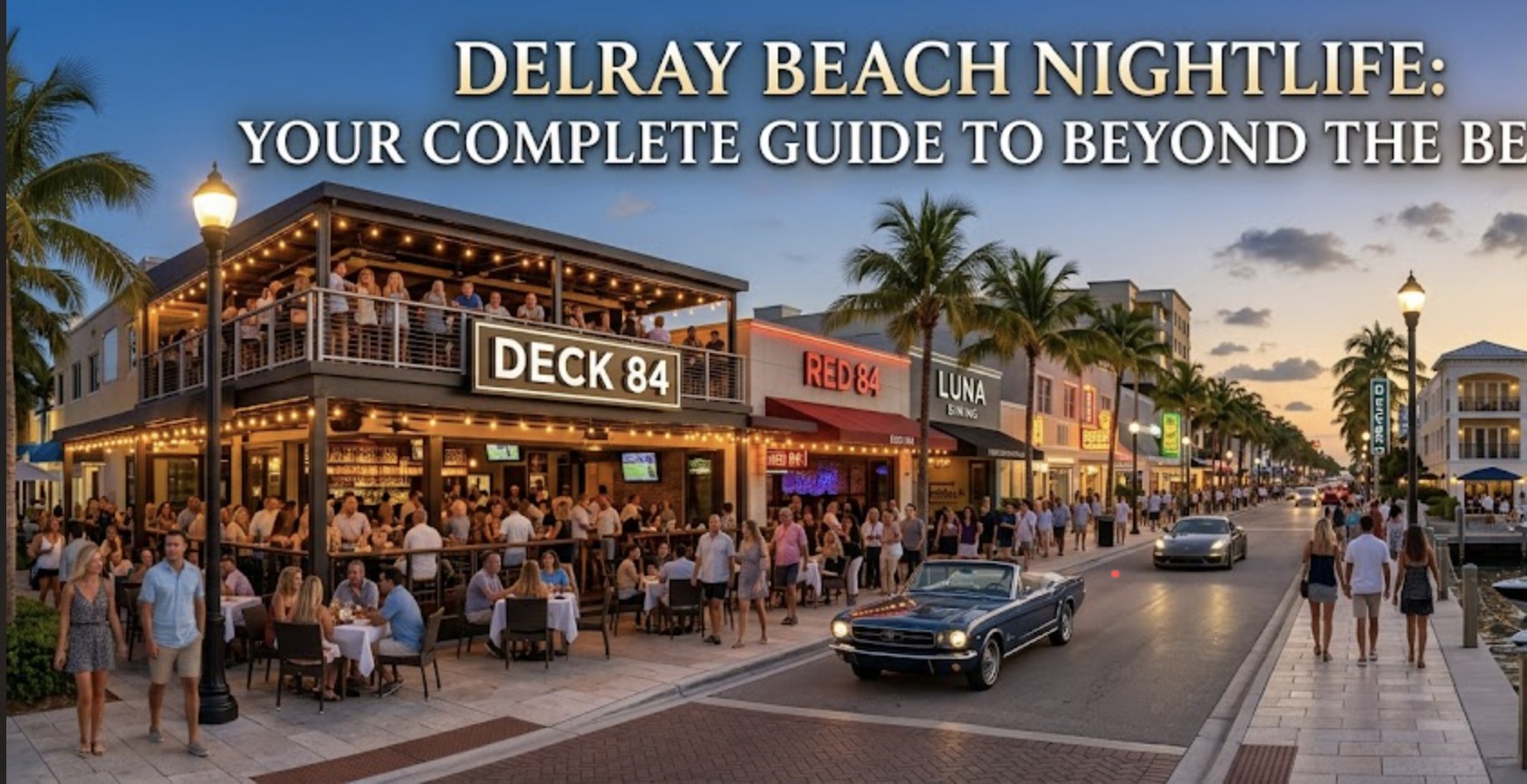
Delray Beach Nightlife: The Complete Guide to Atlantic Avenue After Dark
Ernst Cenege has helped dozens of families relocate to Palm Beach County. See his full portfolio and track record at Cenege Real Estate Group.
Atlantic Avenue is the reason Delray Beach carries a 74 walk score — one of the highest in Palm Beach County — and its restaurant, bar, and live-music scene is a real factor in who actually buys here, not just a tourist attraction. If you’re relocating and nightlife access matters to your decision, here’s what’s actually on the street, and — more useful than any bar list — what living near it actually means for noise, parking, and which block gets you both the vibrancy and a quiet night’s sleep. For the full picture beyond nightlife — history, named neighborhoods, and honest trade-offs — see the complete relocation guide.
Atlantic Avenue: What’s Actually There
Atlantic Avenue runs from the beach west through downtown, lined with restaurants, bars, galleries, and shops in a genuinely walkable stretch — this isn’t a strip you drive between stops, it’s one you park once and walk. The corridor’s real anchor on the water side is Deck 84, at 840 E Atlantic Avenue, a waterfront restaurant on the Intracoastal that’s been a fixture since 2010. It’s been named a Top 100 Al Fresco Restaurant by OpenTable and holds a TripAdvisor Travelers’ Choice ranking — happy hour runs Monday through Friday, 3 to 6 p.m., with live music Saturdays and Sundays from 2 to 5:30 p.m.
For Italian, Caffe Luna Rosa, a block off Atlantic at 34 South Ocean Boulevard, has been voted the Delray Beach Chamber of Commerce’s number one Italian restaurant twice and carries repeat Certificate of Excellence awards from both TripAdvisor and OpenTable — genuinely one of the better oceanfront dinner options in the corridor, not just a nightlife stop.
Live Music and Later Nights
Beyond dinner, Atlantic Avenue’s live-music scene is real and varied rather than a single strip of identical bars. Tin Roof runs two separate entertainment rooms plus a large patio directly on Atlantic Ave. Johnnie Brown’s leans into nightly bands and a front-row seat to downtown people-watching. Radcliffe’s Speakeasy & Supper Club brings a different, more curated live-music format to the same stretch. THRōW Social adds an outdoor stage, four separate bars, and games (darts included) for a group-night option. The Hurricane Bar & Lounge rounds out the list as one of the corridor’s established general nightlife spots for a more classic bar experience. For rooftop specifically, Rosewater Rooftop at The Ray Hotel in Pineapple Grove offers craft cocktails and genuine sunset views, and The Reef Rooftop Lounge rounds out the elevated-view options.
Day to Night: How the Street Actually Changes
Atlantic Avenue reads differently depending on when you visit it, and it’s worth understanding both sides before you judge the neighborhood from a single tour. The eastern stretch, closest to the beach, is genuinely a daytime shopping district — surf shops, resortwear boutiques, and casual cafes that give Delray its “Village by the Sea” nickname, a description used consistently enough in national travel coverage that it’s become the city’s informal identity. Cross the Intracoastal bridge onto the mainland stretch, and the character shifts toward the restaurant-and-bar corridor that comes alive after dark — this is where Johnnie Brown’s, Tin Roof, and most of the live-music scene actually concentrate. Tour only during the day and you’ll see the boutique version of Atlantic Avenue and miss the nightlife character entirely; tour only at night and you’ll miss how genuinely walkable and low-key the same street is during business hours. Do both before deciding how this street actually fits your daily life.
Pineapple Grove: The Quieter, Artsier Alternative
One block north of Atlantic Avenue, Pineapple Grove Arts District offers a genuinely different register than the main strip — public murals, working galleries and studios, and a real cultural calendar rather than a bar-forward one. The district’s signature event is the First Friday Art Walk, a free, self-guided evening (6–9 p.m., every first Friday of the month, no ticket required) where local galleries and studios open for exhibitions, artist meet-and-greets, and live music. It’s a real, recurring option for buyers who want Delray’s cultural energy without committing to bar-scene nightlife every weekend — and it’s worth knowing about specifically because most nightlife-focused content skips it entirely in favor of just listing bars.
What a Night Out Actually Costs
Worth budgeting for honestly rather than guessing: happy hour at a spot like Deck 84 (weekdays, 3–6 p.m.) is the most economical way to experience the corridor, with discounted bar bites and drinks before the dinner crowd arrives. A full sit-down dinner at an established spot like Caffe Luna Rosa runs $26–55 per person for dinner, $10–22 for lunch — a real, sourced range rather than a vague “moderate” label. Rooftop venues and live-music spots with cover charges or venue minimums on weekend nights push higher. None of this is unusual for a walkable coastal entertainment district, but it’s a real recurring cost worth factoring into a lifestyle budget if easy nightlife access is part of why you’re choosing this specific submarket.
The Seasonal Reality: It’s Not the Same Crowd Year-Round
Atlantic Avenue in February is a genuinely different street than Atlantic Avenue in August, and it’s worth knowing that before you tour once and assume you’ve seen it. Snowbird season — roughly November through April — brings the corridor’s fullest crowds, longest waits at established spots like Deck 84, and the most competitive weekend reservations. The summer stretch, May through October, is quieter and more locals-only, easier to walk into a rooftop bar without a wait, but also the same window that brings South Florida’s heat, humidity, and hurricane season into the picture. If nightlife access is genuinely part of your relocation decision, tour during both windows if you can, or at minimum ask directly what the specific venue’s off-season crowd actually looks like — a Tuesday in July tells you almost nothing about a Saturday in February, and vice versa.
If You’re Moving Here: What Living Near the Nightlife Actually Means
This is the part a tourist guide won’t tell you, and it’s the part that actually matters for a real estate decision. Delray Beach updated its noise ordinance in early 2026, replacing subjective noise standards with defined decibel limits that vary by time of day and location specifically to balance the entertainment district against residents living near it — a real, recent signal that the city takes the trade-off seriously rather than leaving it unmanaged.
Parking is the other practical reality. Residents can apply for the city’s Resident Downtown Parking Permit — $12 a year — which covers designated garages, lots, and certain side streets, but it’s explicitly not valid on Atlantic Avenue itself or at beachside meters. If you’re picturing parking directly outside your building on the avenue, that’s not how it works; budget for a garage or side-street spot instead.
The single most useful tip for buyers who want the lifestyle without the noise: the block immediately off Atlantic Avenue — one street over, not on it — tends to offer the best balance, keeping an easy walk to everything while noticeably cutting nighttime noise. Higher floors in condo buildings closer to the corridor achieve something similar without giving up proximity at all. If you’re sound-sensitive, tour at 10 p.m. on a Friday before you make an offer, not just at 2 p.m. on a Tuesday — the street reads completely differently at each.
Who This Actually Fits
Delray Beach’s own buyer profile backs this up: remote workers in their late 20s to mid-40s and empty nesters prioritizing lifestyle over square footage are the submarket’s core buyers, and Atlantic Avenue’s nightlife is a real part of why — not a coincidence. If that’s the draw, the Delray Beach neighborhood guide covers the full picture beyond just the restaurant scene. If quiet is actually the priority and the nightlife access is a lower concern, the retiree-focused breakdown in is Delray Beach a good place to retire covers that different angle directly — including the honest trade-off that Delray’s energy cuts both ways depending on what stage of life you’re buying for. For a direct comparison against a quieter, more traditional submarket, Boca Raton vs. Delray Beach lays out that choice in full.
Getting Around at Night
The real advantage of Delray’s nightlife over most Florida entertainment districts is that you genuinely don’t need a car once you’re in it — walk from dinner to a rooftop to live music without ever moving your vehicle, which isn’t true of more spread-out submarkets in the county. For addresses more than a few blocks from Atlantic Avenue, rideshare availability along the corridor is reliably strong given the volume of nightly traffic, and it’s the more realistic option late at night than trying to find street parking twice in one evening. If walkable nightlife access is a genuine priority rather than a nice-to-have, that should shape how many blocks from Atlantic Avenue you’re willing to consider — every block of distance is a real trade-off against the walk-home convenience, not just a minor difference in commute time.
FAQ
What is Delray Beach’s nightlife actually like? Centered on Atlantic Avenue, a walkable strip of restaurants, live-music venues, and rooftop bars — genuinely varied rather than a single bar-crawl strip, ranging from waterfront dining at Deck 84 to live bands at Tin Roof and Johnnie Brown’s to rooftop cocktails at Rosewater and The Reef.
Is it loud to live near Atlantic Avenue? Expect real foot traffic and late-night noise directly on or adjacent to the avenue. Delray Beach updated its noise ordinance in 2026 with defined decibel limits to manage this, and the block immediately off Atlantic — rather than on it — typically offers a meaningfully quieter night while keeping an easy walk to everything.
Where do you park near Atlantic Avenue if you live downtown? Residents can get a Resident Downtown Parking Permit for $12/year covering city garages, lots, and certain side streets — but it does not cover Atlantic Avenue itself or beachside meters, so factor that into where you’d actually park day to day.
What are the best restaurants on Atlantic Avenue in Delray Beach? Deck 84, a waterfront American restaurant since 2010 with an OpenTable Top 100 Al Fresco award, and Caffe Luna Rosa, a twice-voted number-one Italian restaurant by the local Chamber of Commerce, are two of the corridor’s most established, highly-rated options.
Is Delray Beach’s nightlife a reason people buy here, or just a visitor draw? Both, but it’s a real factor for buyers specifically — Delray’s core submarket includes remote workers and empty nesters who prioritize lifestyle access, and Atlantic Avenue’s walkable restaurant and live-music scene is a documented part of that appeal, not incidental to it.
What is the First Friday Art Walk? A free, self-guided evening event held every first Friday of the month from 6–9 p.m. in the Pineapple Grove Arts District, one block north of Atlantic Avenue — local galleries and studios open for exhibitions, artist meet-and-greets, and live music. No ticket required.
Is there a quieter alternative to Atlantic Avenue’s bar scene? Yes — Pineapple Grove, one block north, offers Delray’s arts-and-culture energy (murals, galleries, studios) without the bar-forward atmosphere of the main strip. It’s a genuine middle ground for buyers who want proximity to the culture without committing to weekend bar nightlife specifically.
Do you need a car to enjoy Delray Beach’s nightlife? No — that’s a real advantage of this submarket over more spread-out parts of the county. Within the corridor, dinner, drinks, and live music are all walkable from each other; rideshare covers anything farther, and it’s the more realistic late-night option than searching for parking twice in one evening.
Is Delray Beach’s nightlife busier at certain times of year? Yes — snowbird season (roughly November through April) brings the fullest crowds and longest waits at established restaurants and bars. May through October is noticeably quieter and more locals-driven, though it overlaps with South Florida’s hottest, most humid months and hurricane season.
Related Reading
Thank you!
Your relocation guide is on its way — we'll be in touch within 24 hours.